
The Supreme Court of India has issued a strong warning against the use of "non-existent, fake, and hallucinated" judgements generated by artificial intelligence (AI), likening it to "the release of methyl Isocyanate in the province of law and justice: invisible, insidious, and catastrophic." The court set aside an NCLT verdict that relied on such AI-generated precedents.
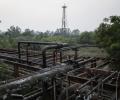
Incineration of entire 358 tonnes of toxic waste from the defunct Union Carbide factory finally concluded as contaminated soil and packaging material were burnt at a disposal plant in Madhya Pradesh's Pithampur on Thursday, over six months after the consignment was brought to the unit.

The waste disposal at the plant in Dhar district's Pithampur industrial area was undertaken following directives of the Madhya Pradesh high court.

A petition has been filed in the National Green Tribunal's Bhopal bench, seeking an assurance from the Madhya Pradesh government that the Union Carbide waste disposal in Pithampur won't harm people in nearby areas. The petition, filed by a Jabalpur-based social organisation, has urged the NGT to direct the state's chief secretary to declare on oath about the safety of people in Pithampur in Dhar district where the waste has been transported for disposal. The petition also seeks direction to the MP government to publish a specific report regarding the disposal of this waste to allay public concerns.
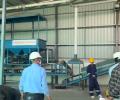
The trial incineration of 10 tonnes of waste from the Union Carbide plant in Bhopal, responsible for the 1984 gas tragedy, began on Friday afternoon in Pithampur, Madhya Pradesh. The process, ordered by the Madhya Pradesh High Court, is expected to take 72 hours to complete. The waste includes soil, reactor residues, pesticide residues, and other materials. The State Pollution Control Board says the chemicals in the waste have become "almost negligible" and there is no presence of methyl isocyanate gas. The incineration process is being monitored by the Pollution Control Board and broadcast live.

The first round of trial incineration of 10 tonnes of waste connected to the 1984 Bhopal Gas Tragedy has begun in Pithampur, Madhya Pradesh, amid tight security. The Supreme Court refused to intervene in the MP High Court's order directing the transfer and disposal of waste at a private company-operated plant in Pithampur. The trial incineration is being conducted in the presence of scientists from the central and state pollution control boards. Protesters have expressed apprehensions about harm to the human population and environment due to the disposal of this waste, but the state government has rejected these concerns, saying that solid arrangements are in place for safe disposal.
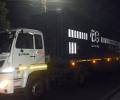
Two men were hospitalised after they set themselves afire on Friday amid a bandh call in Madhya Pradesh's Pithampur against the planned disposal of 337 tonnes of Union Carbide waste in the industrial town, an official said.

A rally marking the 41st anniversary of the Bhopal gas tragedy was disrupted by a controversy over an effigy allegedly depicting an RSS 'sevak,' leading to an FIR against organizers.
Nearly 900 tonnes of ash generated from the incineration of toxic waste linked to the Bhopal gas tragedy remains undispensed after the Madhya Pradesh High Court directed the state government to find an alternative disposal site.

The unloading of 337 tonnes of hazardous waste from the defunct Union Carbide factory in Bhopal began at an incineration unit in Pithampur, Madhya Pradesh. The exercise, which commenced amid protests from locals concerned about its impact on health and environment, is being carried out following safety regulations. The waste, comprising soil, reactor residues, pesticide remnants, and other materials, has been transported from Bhopal to Pithampur for disposal. The Madhya Pradesh Pollution Control Board has asserted that the chemical effects of certain substances in the waste have diminished. The local administration has launched an awareness campaign to address concerns regarding the disposal process.
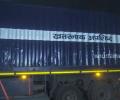
Forty years after the Bhopal gas tragedy, 377 tons of hazardous waste has been shifted from the defunct Union Carbide factory for its disposal, an official said.

Indifferent parent, dithering states and a lethargic Centre have allowed Union Carbide's deadly waste to poison the soil and groundwater in Bhopal.
Even after the passage of 27 years, a consensus -- between the government and the non-government -- on the number of victims of Bhopal gas disaster is elusive.
A Bhopal court on Friday ordered the Central Bureau of Investigation to arrest former Union Carbide chairman Warren Anderson and produce him without delay, prompting survivors of the 1984 Bhopal gas tragedy to celebrate on the streets.On the intervening night of Decmber 2 and 3, 1984, Union Carbide Ltd had spewed methyl isocyanate, a lethal toxic gas, killing thousands of people and maiming thousands of others.

The Bhopal gas tragedy of 1984 changed an entire generation of women in Bhopal to shed their social inhibitions and fight for a righteous cause. Despite opposition from a conservative society.

The incident comes a day after the town was rocked by protests against the disposal plan amid a bandh call given by the Pithampur Bachao Samiti.

Residents of Tarpura village near Pithampur, Madhya Pradesh, are protesting against the incineration of 337 tons of toxic waste from the 1984 Bhopal gas tragedy at a local facility. They fear the process will be hazardous to health and the environment, despite government assurances. The protest comes after the Madhya Pradesh High Court ordered the transfer of the waste to Pithampur within four weeks. The incident has raised concerns about the potential contamination of soil, underground water, and water sources in the area. The administration has deployed a large police force and held meetings with local residents to address their concerns.

Saluting the people who saved scores of life, YRF announced this project on the same day that the tragedy struck Bhopal 37 years back.

The top court said that a sum of Rs 50 crore lying with the RBI for the victims shall be utilised by the Union of India to satisfy pending claims of victims.

Amnesty International has called on the Dow Chemical Company to appear before a Bhopal court this week to explain why its subsidiary Union Carbide Company repeatedly ignored summons in the 1984 gas leak case.

The work to remove 377 metric tonnes of hazardous waste from the now-defunct Union Carbide factory in Bhopal has begun. The waste will be transported to an incineration site in Pithampur near Indore, around 250 km from Bhopal. The move comes after the Madhya Pradesh High Court ordered the authorities to clear the site, 40 years after the deadly gas leak that killed thousands and left hundreds of thousands with health problems.

An Indian-origin Opposition Labour Party MP secured a debate in Westminster Hall of the UK parliament to call for justice for the victims of Bhopal gas tragedy, which will mark its 38th anniversary early next month.

The Supreme Court on Tuesday asked the Centre to clarify its stand on whether it wants to go ahead with its curative petition seeking Rs 7,844 crore as additional funds from successor firms of the US-based Union Carbide Corporation (UCC) for giving compensation to victims of the 1984 Bhopal gas tragedy.
Gas affected areas in Bhopal are still bereft of basic amenities.
NGOs working for the rights of the survivors of the 1984 Bhopal gas disaster on Wednesday alleged that various governments in Madhya Pradesh and at the Centre have failed to bring the culprits of the world's biggest industrial tragedy to justice even after 37 years.
The Union Carbide Corporation gave a compensation of $470 million (Rs 715 crore) after the toxic gas leak from the Union Carbide factory on the intervening night of December 2-3, 1984, killed over 3,000 people and affected 1.02 lakh others.

Here are other gas leaks that made headlines in the last few years:

Meetings and protest marches in support of the demands of the victims marked the 29th anniversary of the Bhopal gas catastrophe here today.

The Railway Men is a compelling watch; the subject is handled with seriousness and respect without going overboard with the dramatic impact, observes Mayur Sanap.

... And it's not just fear of job losses, says Ajit Balakrishnan.

This is how films that bring to life man-made industrial disasters should be made, says Prasanna D Zore.

Deepak Kher was one of many volunteers who chipped in in the aftermath of the 1984 Bhopal gas tragedy which killed over thousands of people in one night, and damaged the future of many others. He recounts his experience on the tragic night and the days that followed.

The world had lost an opportunity to know long-term toxic effects of Methyl Isocyanate which had leaked from the Union Carbide factory on the night of December 2, 1984, because government research agencies have lost track of a bulk of survivors, says Dinesh C Sharma.

Sanjeeb Mukherjee, who was eight years old when the deadly gas leaked from Union Carbide's factory, gives his account of living in the city during that fateful period

Thirty-seven years and some three generations later, the darkness of that night when 40 tonnes of lethal methyl isocyanate leaked out of the Union Carbide plant hangs like an impenetrable cloud over the lives of untold thousands, including children as young as three whose parents were exposed to the toxin when they themselves were children.

Photojournalist Chandu Mhatre, one of the first to reach Bhopal after India's worst industrial disaster ravaged the city, remembers his worst seven days, in a conversation with Vaihayasi Pande Daniel/Rediff.com.

Andhra Pradesh Chief Minister Y S Jagan Mohan Reddy announced an ex gratia payment of Rs 1 crore each to the kin of those killed in the incident.
.jpg)
By the end of 2020, India will lay 32,737 km across the length and breadth of the country. It needs to lay down and comply with strict safety standards especially since some of these pipes will go through areas of dense habitation, says Rashme Sehgal.
